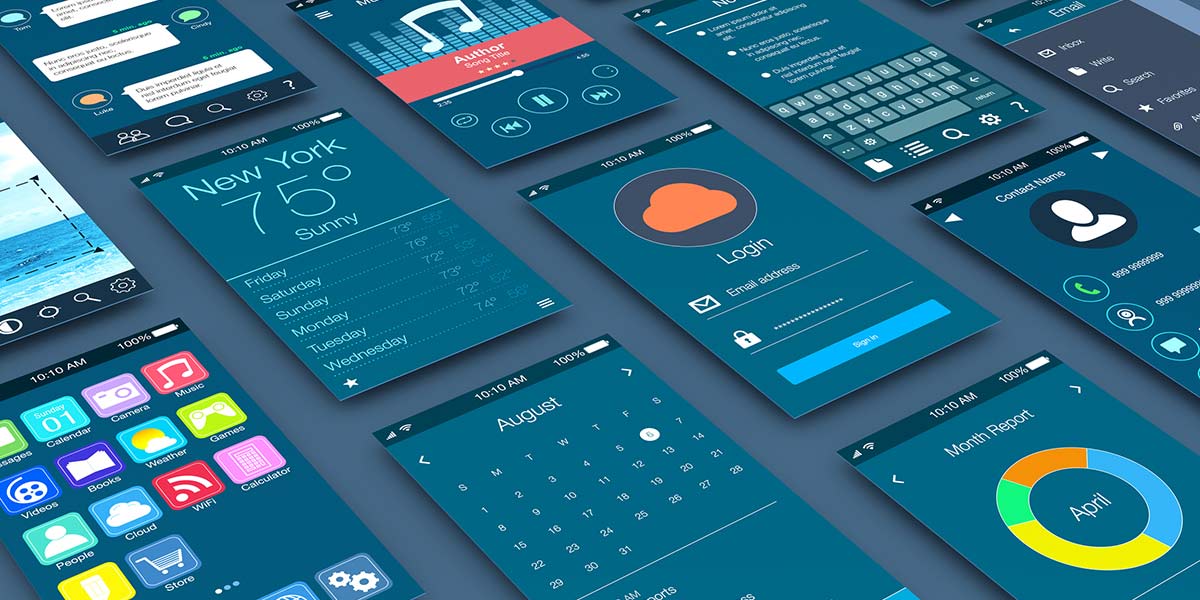
On earth of modern application, person experience no longer lives only on screens. More and more, it resides while in the invisible connections involving units—Those people streams of data and instructions which make electronic ecosystems functionality. These connections are created probable by APIs (Software Programming Interfaces), that have advanced from complex instruments for builders in the new frontiers of consumer interaction. Nowadays, APIs are classified as the unseen interfaces shaping how end users practical experience know-how, even every time they under no circumstances contact a button. I am Gustavo Woltmann, developer with 20 year experience, let us Look at how meaninghul APIs are currently.
From Screens to Devices
For decades, user interfaces were described by what people could see and contact—buttons, icons, menus, and screens. The art of user working experience revolved all-around building these visual layers intuitive and delightful. But as electronic ecosystems expanded, a silent revolution began beneath the surface. The key interactions ended up not happening concerning human beings and screens, but among applications and units.
Enter the API—Software Programming Interface—the invisible backbone of recent application. As opposed to guiding human clicks, APIs determine how devices talk. They enable applications to share information, trigger steps, and coordinate complicated responsibilities routinely. Within this new truth, the boundaries amongst platforms blur: your ride-sharing application connects for your map assistance, your climate widget pulls data from a meteorological server, and your Exercise tracker syncs seamlessly along with your cellular phone.
This driving-the-scenes connectivity has quietly redefined what “person knowledge” means. Even though users interact by way of a graphical interface, the real working experience generally is determined by how perfectly APIs exchange facts in the qualifications. A flawless transaction, immediate update, or authentic-time notification occurs mainly because APIs are working correctly with each other.
Consequently, modern-day software growth is shifting its priorities. The Visible layer—the monitor—continues to be critical, but it really’s no longer The entire Tale. The standard of the experience now depends equally to the invisible architecture that powers it. Enterprises that once targeted exclusively on UI style and design at the moment are investing heavily in API style, recognizing that dependability, pace, and integration push shopper gratification as much as aesthetic attraction.
From screens to techniques, know-how has become fewer about what we see and more details on how everything connects. The future of user experience is not just visual—it’s structural, seamless, and powered by the quiet intelligence of APIs working behind each tap, simply click, and swipe.
APIs as Invisible UX
In today’s related electronic earth, quite possibly the most seamless person activities generally transpire with no end users acknowledging it. Driving each and every immediate login, 1-simply click payment, or serious-time update lies a community of APIs—the unseen interfaces that form how engineering feels. Whilst traditional structure concentrates on what consumers can see, API style determines how effortlessly almost everything operates.
APIs have grown to be the invisible layer of person practical experience, orchestrating interactions across platforms and devices. Once your social networking application promptly pulls your images in the cloud or your banking application syncs flawlessly together with your budgeting program, you’re benefiting from considerate API style. The responsiveness, trustworthiness, and consistency of Those people connections outline the overall knowledge around Visible design and style or navigation at any time could.
Badly designed APIs, On the flip side, can break that illusion of effortlessness. A gradual integration, mismatched information, or process failure produces friction identical to a buggy interface would. That’s why several main firms now treat APIs as core UX factors, not just backend instruments. Their style ought to prioritize clarity, predictability, and stability—attributes that ensure developers can Make dependable capabilities, and customers can get pleasure from flawless performance.
For modern builders, crafting an awesome API is surely an act of person-centered design—only the “end users” are often other developers. Thorough documentation, dependable endpoints, and intuitive logic make APIs easier to adopt and integrate, fostering superior close-user encounters.
In this way, APIs have redefined what this means to structure for usability. They flip interactions into fluid, connected encounters that transcend screens. As devices go on to communicate much more immediately with one another, APIs are rising as The brand new frontier of UX—a person where essentially the most lovely interface would click here be the a person users by no means see.
The Rise in the API-1st Entire world
In past times, program was crafted with the person interface first—a screen, a menu, a visible structure—though the fundamental devices arrived later on. Nowadays, that buy has flipped. We now reside in an API-very first planet, in which programs are developed from the inside out, commencing with the info and logic that push every single interaction.
An API-very first method indicates developers get started by defining how units converse ahead of they even Construct the user-facing levels. This frame of mind ensures that every company—irrespective of whether it’s authentication, payment processing, or analytics—is often reused, scaled, and integrated across various platforms. In place of developing for just one interface, providers style and design for an ecosystem of connections.
The result is agility and interoperability. Modern corporations function across products, cloud providers, and 3rd-occasion integrations, and APIs make that complexity manageable. They permit startups to plug into worldwide infrastructures like Stripe, Google Maps, or OpenAI within hrs rather than months. This accelerates innovation and concentrations the enjoying field, enabling smaller teams to make refined products which rival business software.
For businesses, the change to API-very first design isn’t just complex—it’s strategic. It encourages modular architecture, continuous shipping, and easier collaboration amongst groups. APIs grow to be the deal of communication amongst internal techniques and exterior partners, delivering steadiness in an at any time-switching digital landscape.
In the world driven by automation and connectivity, APIs are no more an afterthought—they’re the muse. They energy anything from logistics networks to smart properties, reworking how software is developed, preserved, and professional. The rise in the API-initially world represents a basic adjust in how technological know-how evolves: much less about screens and clicks, and more about how just about every procedure talks, shares, and grows together.
Collaboration, Automation, and the New UX
As APIs get Heart phase in modern-day program, they’re not just enabling technologies—they’re reshaping how folks and programs collaborate. Within an API-pushed ecosystem, collaboration extends outside of groups and instruments to your pretty architecture of electronic products and solutions. APIs act as the bridges between solutions, automating workflows and making encounters that really feel easily connected.
Consider how these days’s productivity tools work: your calendar syncs with your online video conferencing application, your messages induce job updates, and also your information are instantly backed up across platforms. None of the comes about manually—it’s driven by APIs Doing work quietly inside the track record. This invisible collaboration gives increase to a whole new sort of user experience, one which values automation and integration about classic interface design and style.
For developers and products groups, APIs also redefine collaboration internally. As opposed to siloed systems, groups operate from a shared Basis of reusable parts. Designers, engineers, and analysts can Develop and refine products at the same time, making use of APIs as the connective tissue that retains every little thing aligned and constant. This modular solution quickens iteration, minimizes redundancy, and will make solutions a lot more adaptable to vary.
Through the user’s point of view, the very best electronic encounters are the ones that anticipate desires and remove friction. APIs make that probable by enabling actual-time details circulation and automation—whether it’s clever recommendations, fast payments, or contextual notifications.
Within the period of collaborative automation, the person knowledge is now not confined to some monitor or just one software. It life inside the seamless coordination concerning methods. APIs tend to be the unseen collaborators, empowering humans and devices to operate in sync. The new UX just isn't pretty much creating interfaces—it’s about planning interactions concerning ecosystems, in which automation and collaboration outline what “person-friendly” genuinely suggests.
Designing the Future of Invisible Interfaces
As APIs keep on to weave alongside one another the digital planet, These are paving just how to get a foreseeable future where by interfaces may disappear entirely. The subsequent era of person working experience won’t depend on screens or buttons—it is going to rely upon seamless, context-knowledgeable interactions made feasible by intelligent, interconnected techniques driven by APIs.
Invisible interfaces are previously below in refined sorts: a voice command that orders groceries, a smartwatch that adjusts your thermostat, or an application that implies the most beneficial route before you even ask. These experiences are constructed not on conventional design and style factors but on info circulation, automation, and integration—all orchestrated by way of APIs.
Planning for this foreseeable future needs a shift in pondering. As opposed to concentrating on what customers see, designers and developers must consider how systems understand and answer. The emphasis moves from Visible format to behavioral logic—crafting interactions which can be anticipatory, all-natural, and reliable. Successful API design will copyright on clarity, stability, and adaptability, guaranteeing that invisible interactions continue to be dependable and respectful of user intent.
This change also redefines creativeness in technologies. The designers of tomorrow will condition ecosystems, not simply encounters. They’ll need to consider how diverse providers, sensors, and data resources collaborate to kind a unified, human-centered method.
During this earth, APIs grow to be the architects of invisibility. They enable frictionless, predictive activities in which the interface fades absent along with the interaction alone turns into the product. As we go toward ambient computing, clever environments, and AI-driven personalization, the way forward for user working experience gained’t be what we contact—It's going to be what seamlessly occurs for us, run from the silent structure of APIs.
Conclusion: The Silent Electrical power At the rear of the Display
APIs have redefined what this means to interact with technological know-how. They may not have buttons or shades, but they form how electronic encounters sense—smooth, linked, and speedy. In an ever more interconnected globe, the API is no more simply a developer’s Instrument. It’s The brand new person interface, quietly transforming how we Stay, work, and link from the digital age.